русский
 Español
 عربى
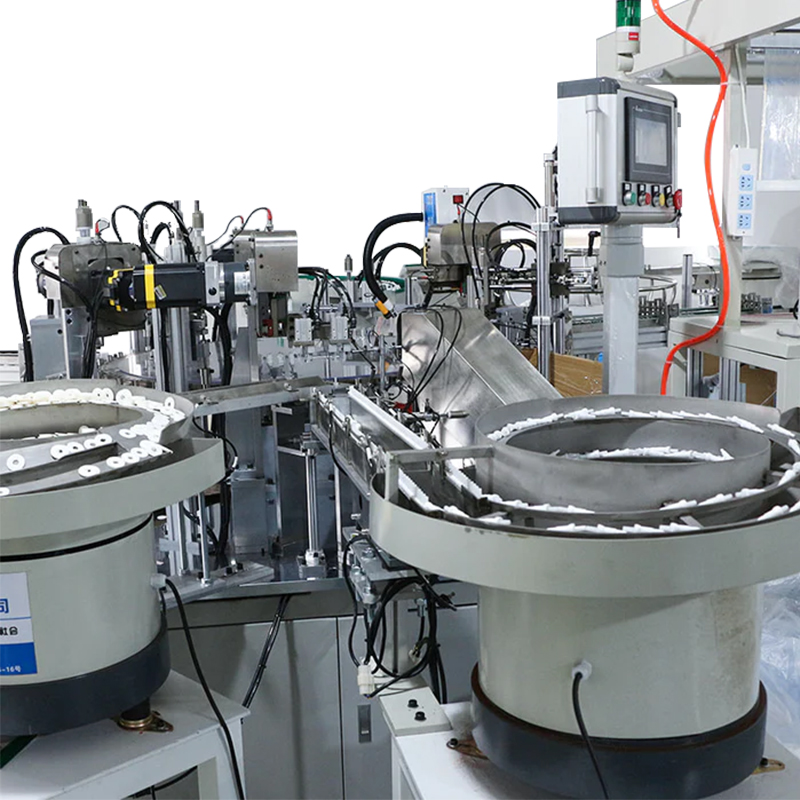
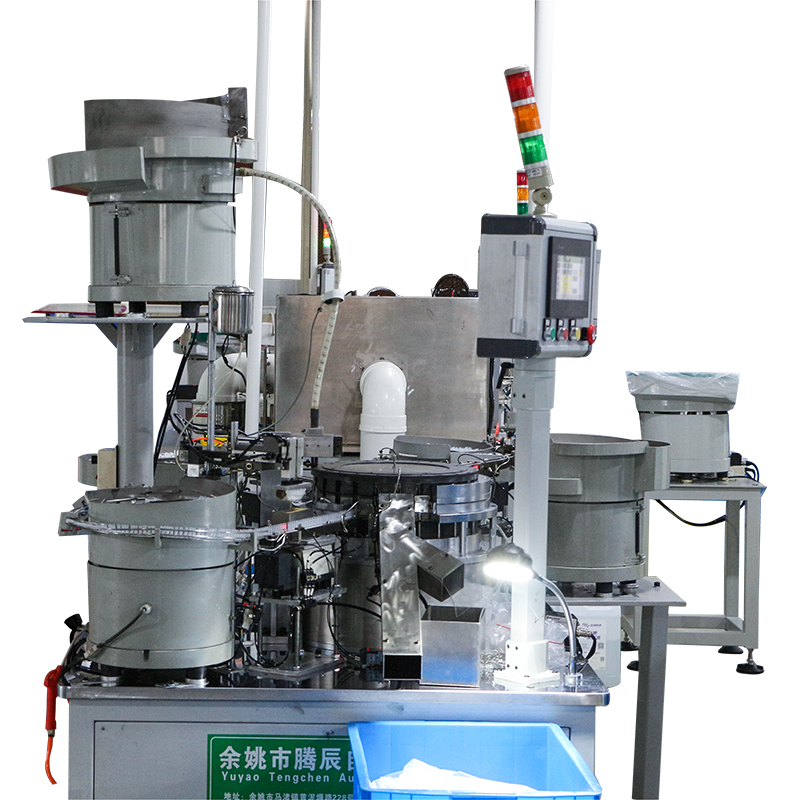
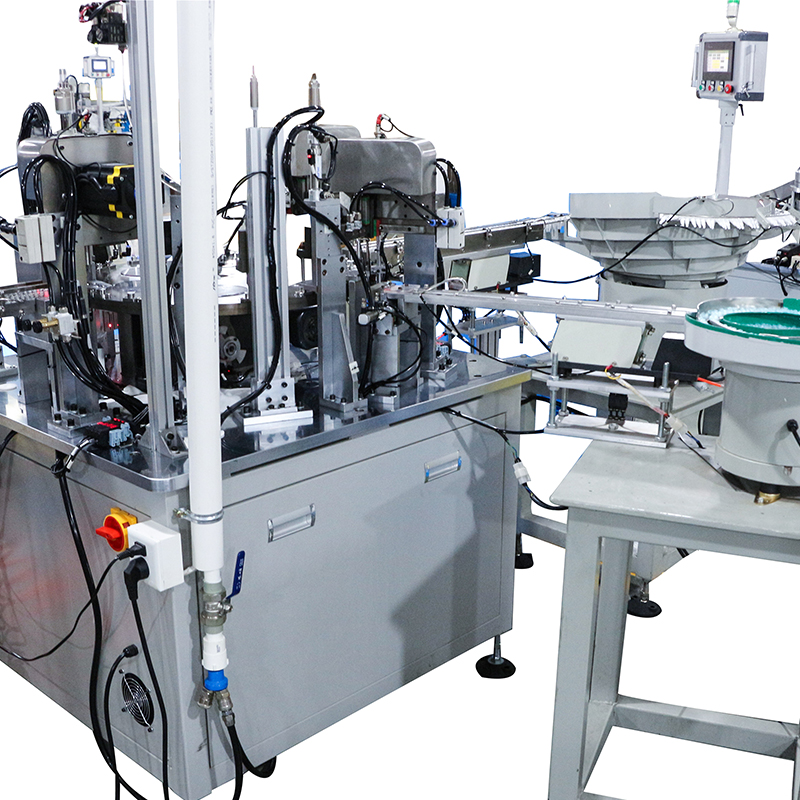
When evaluating floor space requirements and reconfiguration capability, Automatic Assembly Machines generally offer more linear layout flexibility, while modular rotary indexing assembly systems excel in compact, high-speed, fixed-sequence production. The right choice depends on your production volume, product variety, and available floor space. This article breaks down the key differences with real-world data to help you make an informed decision.
Understanding the Two System Architectures
Before comparing footprint and flexibility, it is important to understand how each system is structurally designed.
Automatic Assembly Machine
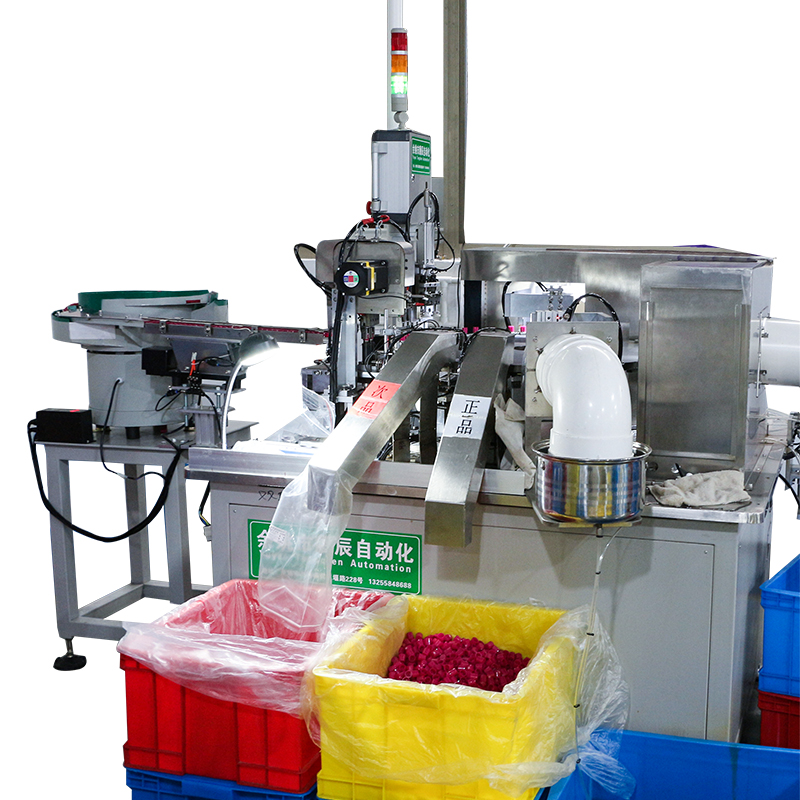
An Automatic Assembly Machine typically follows a linear or free-transfer conveyor architecture, where workpiece carriers move through a series of stations arranged in sequence. Each station performs a discrete task — pressing, fastening, welding, inspection, or labeling — and the line can be extended or reconfigured by adding or removing stations. Common configurations range from 4 to 20+ stations in a straight or U-shaped line.
Modular Rotary Indexing Assembly System
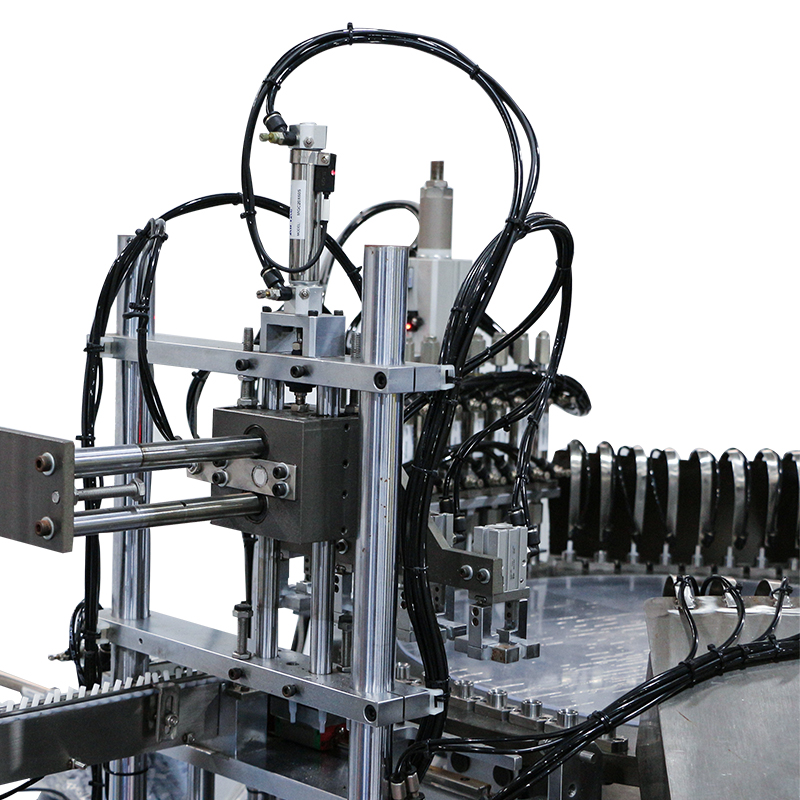
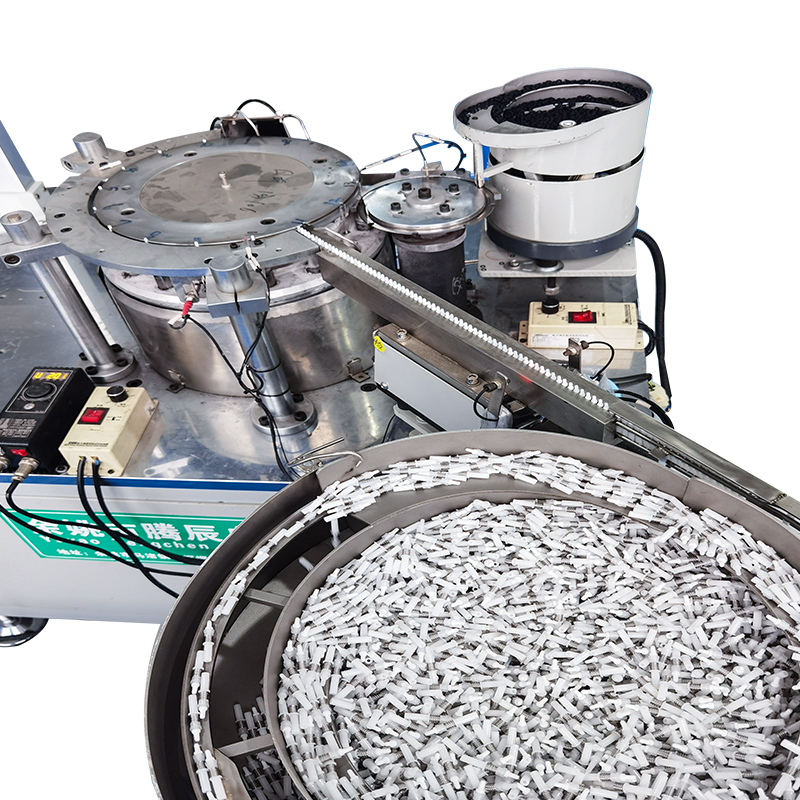
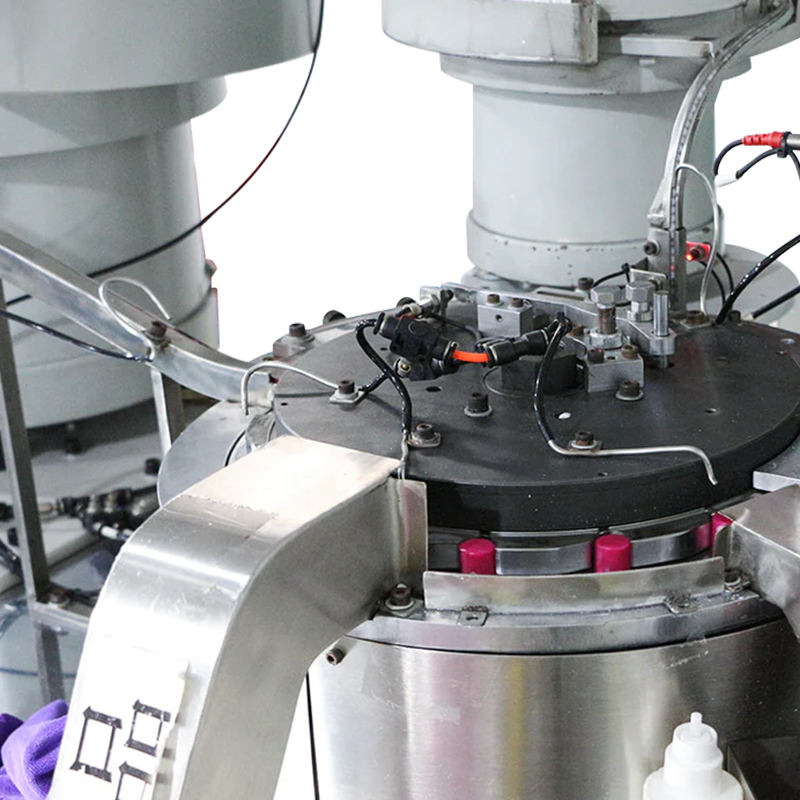
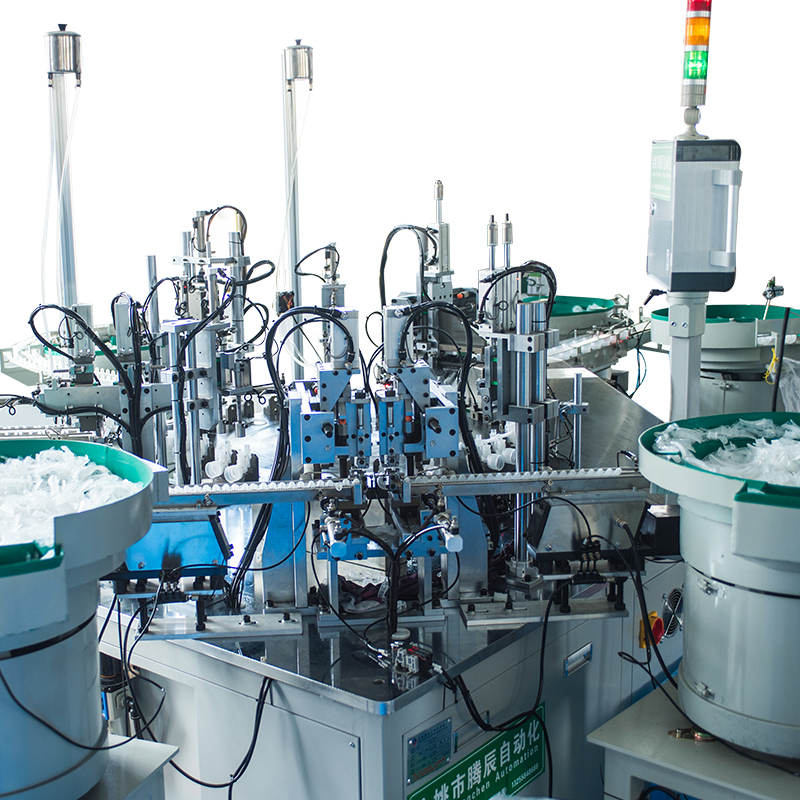
A modular rotary indexing system arranges assembly stations around a central rotating dial or turntable. The workpiece holders are fixed to the dial and index from one station to the next in a circular path. Standard dial sizes range from 400 mm to over 1,500 mm in diameter, accommodating 6 to 24 stations depending on the configuration.
Footprint Comparison: How Much Floor Space Does Each System Require?
Floor space is one of the most immediate concerns for production engineers. Here is a direct comparison based on typical real-world installations:
| Criteria | Automatic Assembly Machine | Modular Rotary Indexing System |
|---|---|---|
| Typical Footprint | 6 m × 2 m to 20 m × 3 m | 1.5 m × 1.5 m to 3 m × 3 m |
| Space Efficiency | Moderate — scales with station count | High — compact circular layout |
| Operator Access | Both sides of the line accessible | Perimeter access only; center inaccessible |
| Station Count Scalability | Unlimited — line can be extended | Limited by dial diameter (typically 6–24) |
| Aisle Clearance Needed | 1–1.5 m on each long side | 0.8–1.2 m around the perimeter |
For facilities with limited floor space, a modular rotary indexing system can deliver equivalent output in up to 60–70% less floor area compared to a linear Automatic Assembly Machine with the same number of stations. However, this advantage diminishes when the assembly process requires more than 16 stations, as dial size and mechanical complexity increase rapidly.
Layout Flexibility: Which System Adapts Better to Change?
Layout flexibility refers to how easily a system can be reconfigured for new products, revised assembly sequences, or expanded production requirements.
Automatic Assembly Machine: Built for Reconfiguration
Modern Automatic Assembly Machines built on free-transfer or pallet-based conveyor platforms are designed with modularity in mind. Key advantages include:
- Stations can be added, removed, or repositioned without rebuilding the entire machine.
- U-shaped, L-shaped, or straight-line layouts are all achievable with the same base platform.
- Product changeover can be achieved via tooling swaps, often in under 30 minutes with SMED-optimized designs.
- Mixed-model production is achievable using barcode or RFID-controlled pallet routing.
For example, an Automatic Assembly Machine used in automotive connector assembly can be reconfigured from a 6-pin variant to a 12-pin variant by swapping two station toolsets and updating the PLC program — a process that typically takes 2 to 4 hours versus 1 to 2 days for a comparable rotary system.
Modular Rotary Indexing System: Optimized for Fixed Sequences
Rotary indexing systems are inherently less flexible. Their circular architecture means:
- Adding a station requires either replacing the dial with a larger one or leaving a station position empty — both inefficient solutions.
- The fixed indexing sequence means all stations must complete their cycle within the same time window (the index time), creating bottleneck risk.
- Workpiece nest tooling is mounted directly on the dial, making product changeover more involved than on a linear Automatic Assembly Machine.
That said, for single-product, high-volume production — such as medical syringe assembly or small connector assembly at 60+ parts per minute — rotary indexing systems are extremely reliable and consistent, with minimal variability between cycles.
Cycle Time and Throughput: Where Each System Wins
Throughput is closely tied to layout architecture. Here is how the two systems compare in typical operating scenarios:
- Modular rotary indexing systems can achieve index times as low as 0.5 seconds, enabling outputs exceeding 3,600 parts per hour for simple assemblies.
- Automatic Assembly Machines on linear transfer platforms typically operate at 1,200 to 2,400 parts per hour for multi-component assemblies, with throughput scaling based on station count and buffer zones.
- Linear systems handle unbalanced cycle times better — if one station takes longer, buffer accumulators prevent line stoppages. Rotary systems have no such buffer, making the slowest station the system bottleneck.
Integration with Peripheral Equipment and Automation
The ability to integrate with robots, vision systems, feeders, and inspection equipment differs significantly between the two platforms.
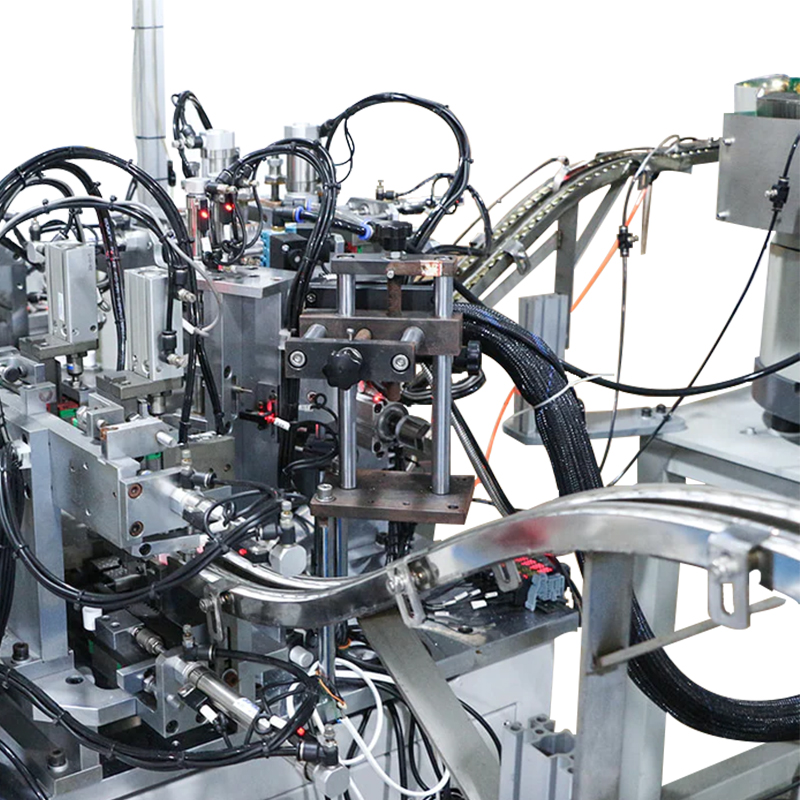
An Automatic Assembly Machine on a linear platform offers unrestricted overhead and side access at every station, making it straightforward to mount 6-axis robots, inline cameras, dispensing systems, or laser markers without spatial conflict between adjacent stations.
On a rotary indexing system, each station occupies a fixed angular segment — typically 22.5° to 60° of arc depending on the dial size — which limits the physical envelope available for peripheral equipment. Installing a large robot or a multi-axis dispensing head at a single station often requires custom engineering to avoid interference with the rotating dial.
Which System Should You Choose?
The decision between an Automatic Assembly Machine and a modular rotary indexing system should be driven by your specific production profile. Use the following guidance:
Choose an Automatic Assembly Machine if:
- You produce multiple product variants on the same line.
- Your assembly process requires more than 12–16 distinct operations.
- Cycle times between stations are unbalanced (one station significantly slower than others).
- You anticipate future product changes and need a platform that can grow with your needs.
- Large or complex components require generous station access for robots or fixtures.
Choose a Modular Rotary Indexing System if:
- You are assembling a single, stable product at very high volumes.
- Floor space is critically limited and a compact footprint is the top priority.
- Your assembly involves small, lightweight components with balanced cycle times under 2 seconds per station.
- Maximum throughput speed is more important than flexibility.
In terms of footprint, the modular rotary indexing system wins for compact, space-constrained environments. In terms of layout flexibility, the Automatic Assembly Machine is the clear winner — it supports more stations, handles mixed-model production, integrates peripheral equipment more easily, and adapts to future product changes without a complete system rebuild. For most manufacturers dealing with evolving product lines and multi-variant assemblies, an Automatic Assembly Machine delivers superior long-term value despite its larger initial footprint.