русский
 Español
 عربى
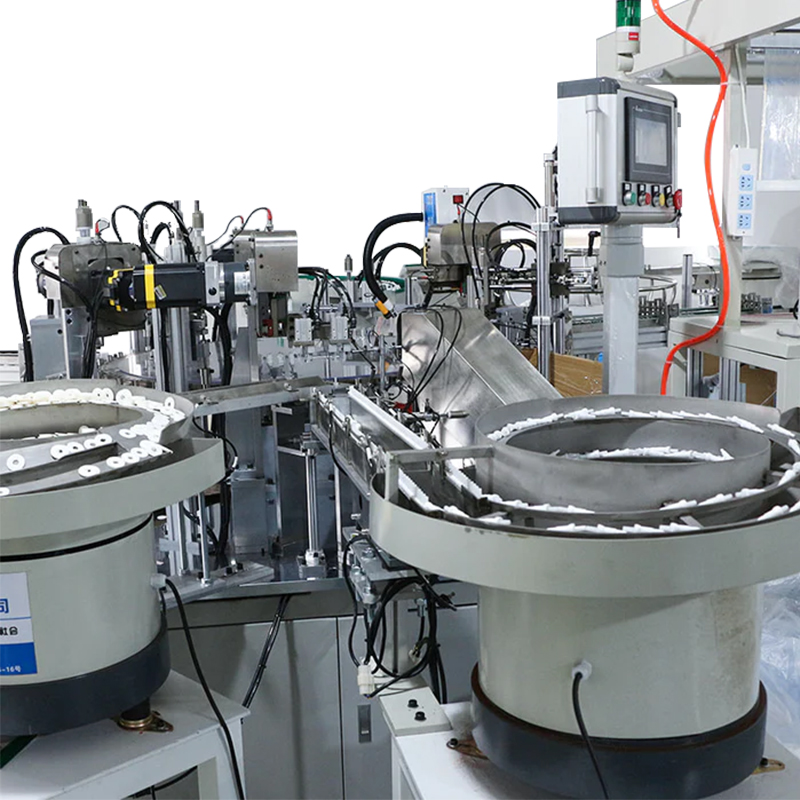
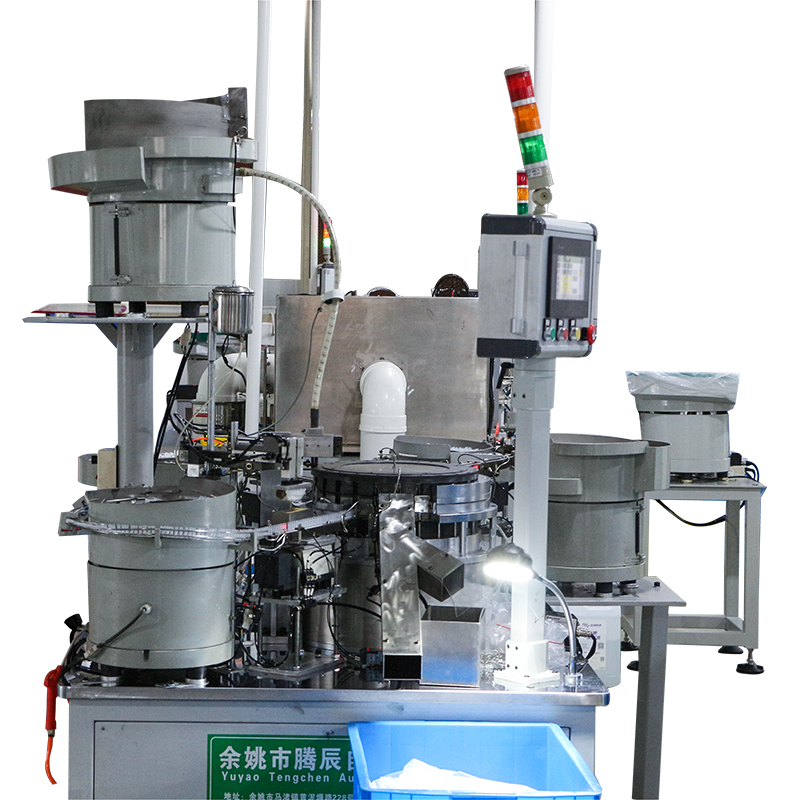
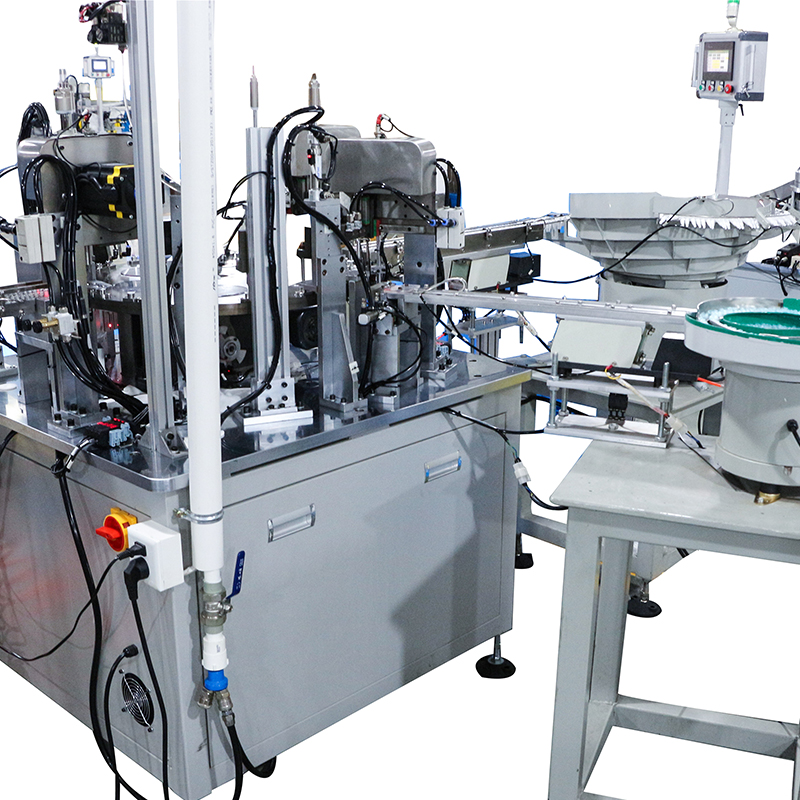
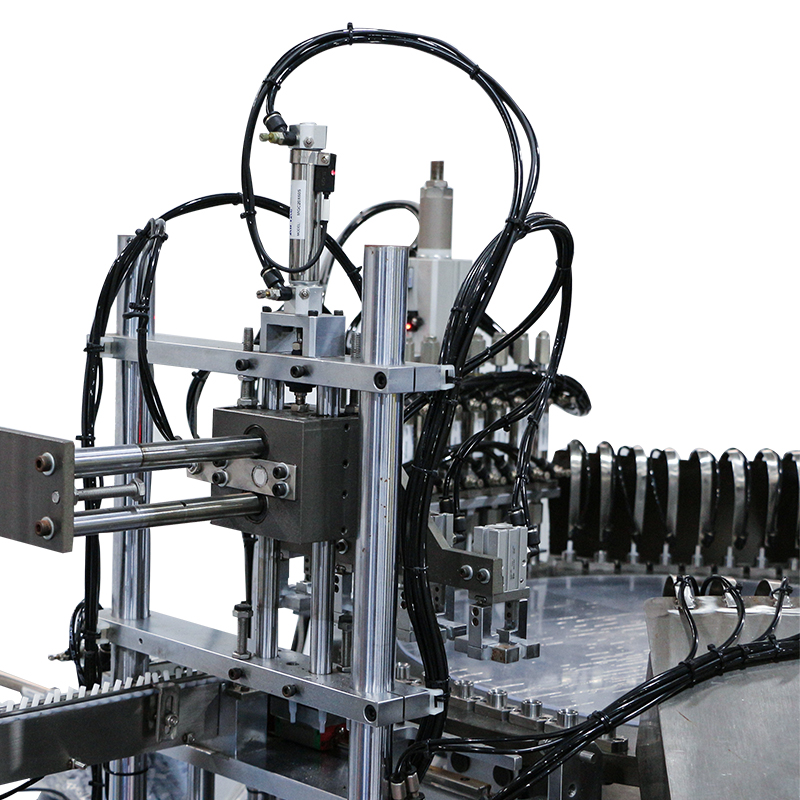
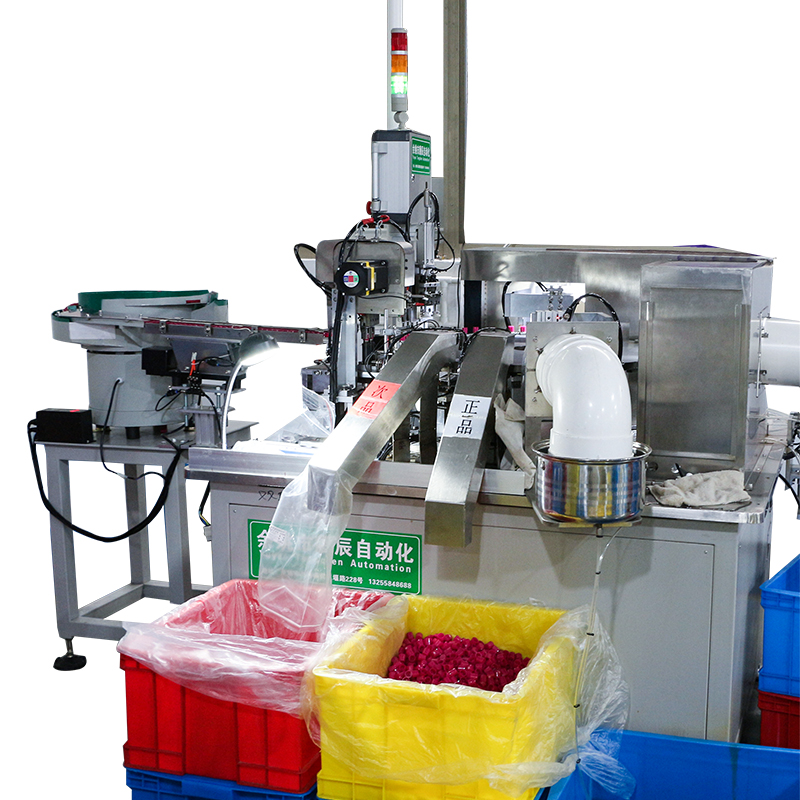
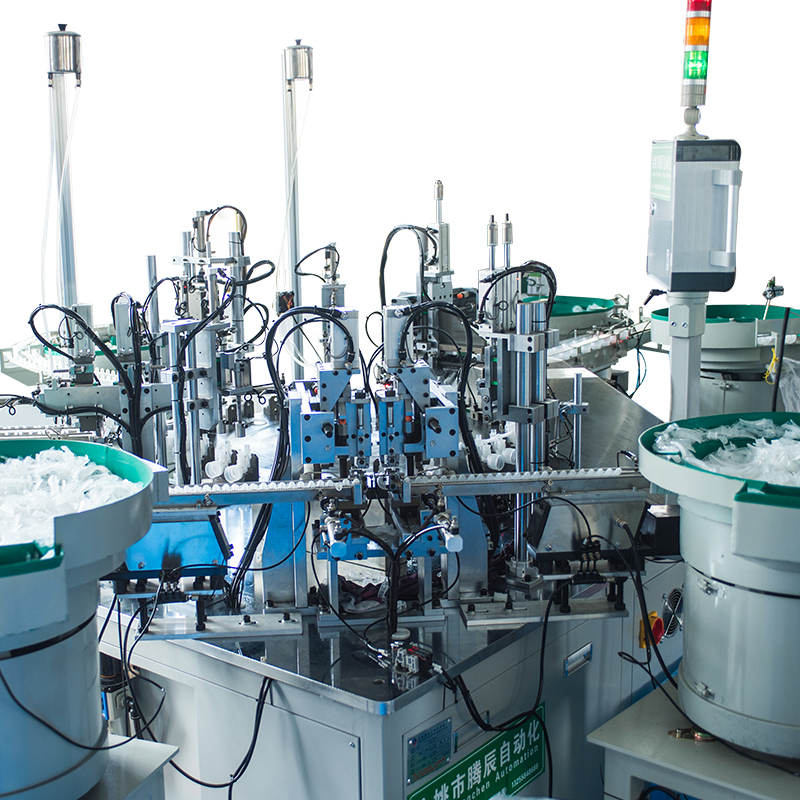
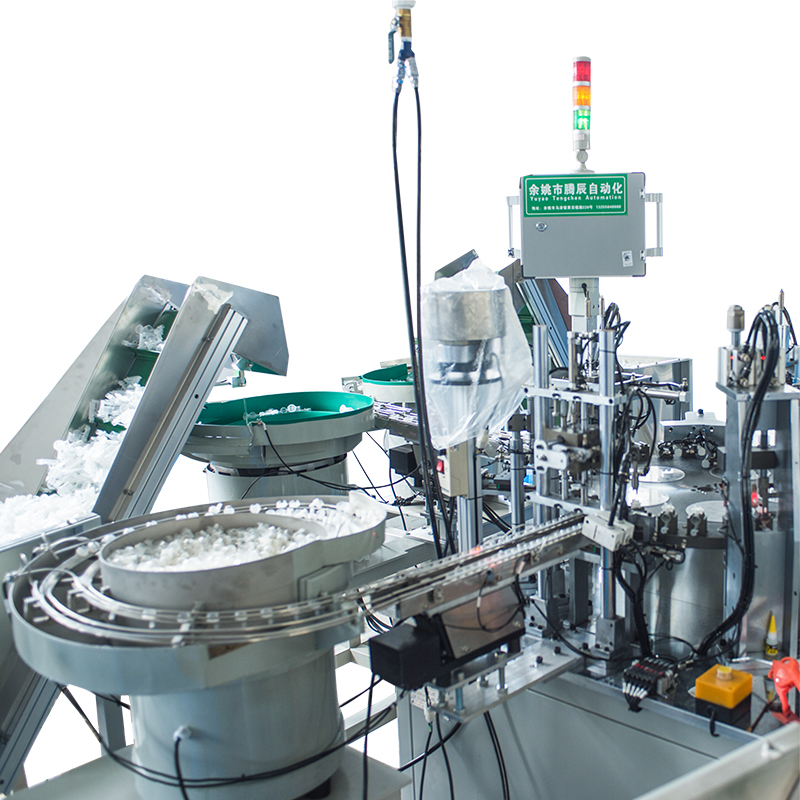
Disc Top Assembly Machines address static electricity and contamination through a layered approach: integrating ionizing air bars, grounded contact surfaces, HEPA-filtered enclosures, and real-time particle monitoring directly into the machine architecture. Much like a perfume pump assembly machine or a dropper assembly machine operating in cosmetic or pharmaceutical lines, the Disc Top Assembly Machine — as a category of automatic assembly machine — must be configured correctly for cleanroom or ESD-sensitive environments. When properly set up, these machines can operate within ISO Class 5–8 cleanroom standards and maintain electrostatic discharge levels below the industry-critical threshold of 100 volts — preventing both product defects and safety incidents on the production floor.
Why Static Electricity Is a Critical Risk in Disc Top Assembly
Disc top caps are predominantly manufactured from polypropylene (PP) or polyethylene (PE) — both of which are highly insulative thermoplastics. During high-speed assembly, repeated contact, separation, and friction between caps, feeding tracks, and mechanical tooling generates triboelectric charging. In a standard production environment, surface voltages on plastic disc tops can reach 10,000 to 30,000 volts without any mitigation in place.
These charged components attract airborne particles — dust, fibers, and microbial contaminants — directly onto sealing surfaces. This challenge is not unique to disc top production: operators of a dropper assembly machine handling glass or plastic dropper components face identical triboelectric risks, particularly when assembling at speeds exceeding 3,000 units per hour. In pharmaceutical or personal care applications, this contamination can compromise product integrity, cause fill weight deviations, and trigger costly batch rejections. In electronics-adjacent cleanroom settings, uncontrolled ESD events can damage sensitive substrates or trigger false sensor readings on the assembly machine itself.
Core ESD Control Technologies Built Into the Disc Top Assembly Machine
Leading manufacturers engineer ESD control directly into the Disc Top Assembly Machine's mechanical and electrical design rather than treating it as an afterthought. As with any high-speed automatic assembly machine — whether assembling disc tops, pump dispensers, or dropper fitments — the primary ESD control technologies include:
- Ionizing Air Bars and Blow-Off Nozzles: Positioned at cap infeed, orientation, and pressing stations, these devices emit balanced positive and negative ions that neutralize static charges on disc tops before assembly contact. Units such as the Simco-Ion IQ Power Bar achieve neutralization to within ±5 volts at a 25mm distance.
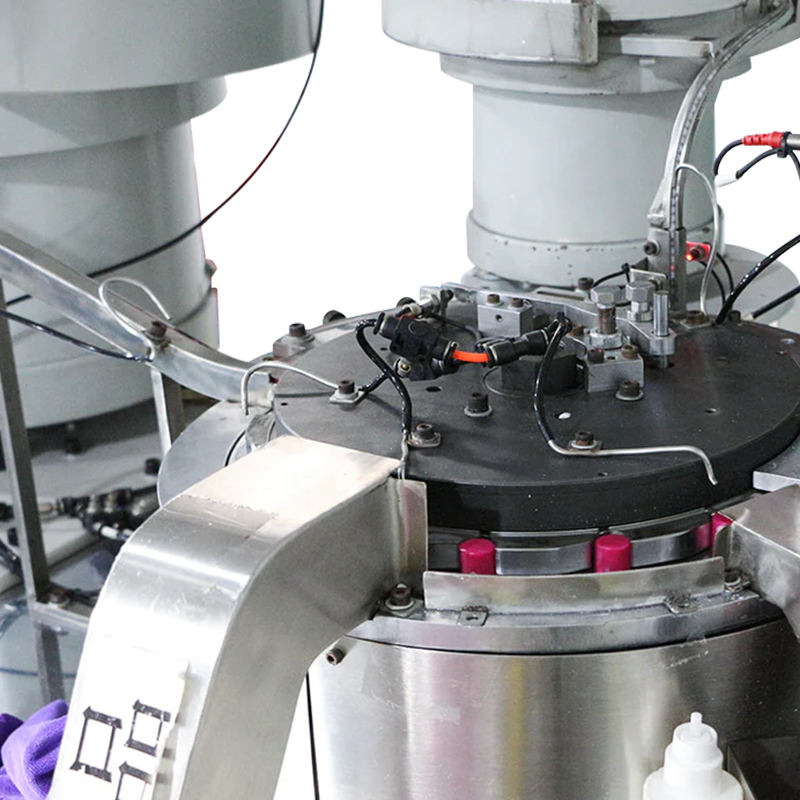
- Grounded Stainless Steel Contact Parts: All guide rails, nest tooling, and press heads are fabricated from grounded 316L stainless steel or ESD-dissipative alloys, providing a continuous charge-bleed path to earth throughout the cap's travel path.
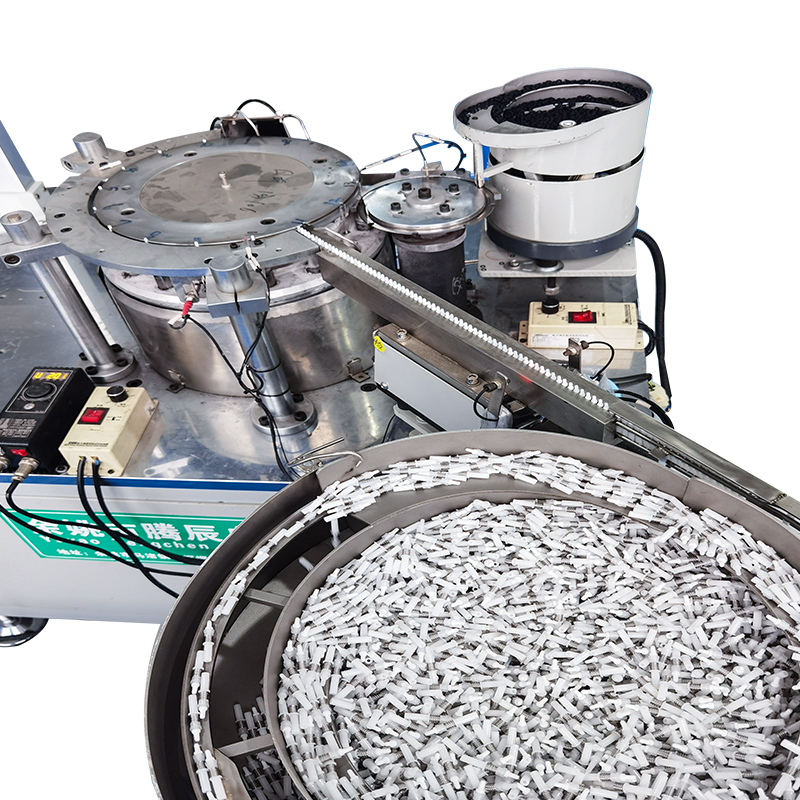
- Anti-Static Conveyor Belts and Vibratory Bowl Liners: The cap feeding system — including vibratory bowl feeders — is lined with carbon-loaded or conductive polymer materials that prevent charge accumulation during high-frequency mechanical agitation.
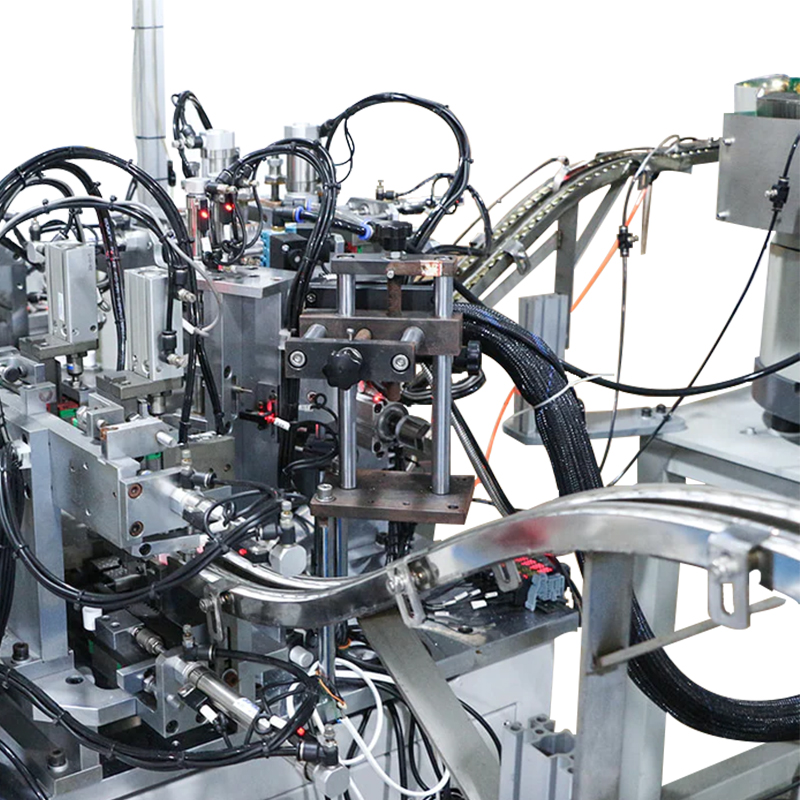
- ESD-Safe Pneumatic Components: Ionized air can be routed through pneumatic actuators used for cap pick-and-place, ensuring that blowing operations do not reintroduce static charges from compressed air lines.
Cleanroom Compatibility: How the Machine Architecture Is Adapted
A standard Disc Top Assembly Machine is not inherently cleanroom-ready. Cleanroom-grade variants require structural and material modifications to comply with ISO 14644-1 particle count standards. The same principle applies across related equipment categories: a perfume pump assembly machine deployed in fragrance manufacturing, for instance, must undergo comparable architectural adaptation when moved into a controlled environment. Key adaptations include:
Enclosure Design and Airflow Management
Cleanroom-configured Disc Top Assembly Machines feature sealed or semi-sealed enclosures with HEPA or ULPA filtration units integrated into the machine canopy. These filters capture particles at 0.3 microns with ≥99.97% efficiency (HEPA) or 0.12 microns with ≥99.9995% efficiency (ULPA), maintaining positive pressure within the assembly zone to prevent unfiltered ambient air from entering. Unidirectional (laminar) airflow is directed downward over the assembly station at velocities typically between 0.3 and 0.5 m/s, consistent with ISO Class 5 cleanroom requirements.
Surface Finish and Material Selection
Internal surfaces exposed to the assembly zone are electropolished to a surface roughness of Ra ≤ 0.8 µm, eliminating micro-crevices where particles or biofilm could accumulate. Non-shedding materials — such as anodized aluminum, PEEK, and cleanroom-grade PTFE — are specified for tooling components that cannot be made from stainless steel.
Lubrication and Particle Generation
Standard mineral-based lubricants are replaced with NSF H1-rated or dry film lubricants on all moving assemblies. Magnetically driven or brushless servo motors eliminate carbon brush wear debris — a common particle contamination source in conventional machines. This design principle is equally critical in a dropper assembly machine where precision torque and zero particulate generation are non-negotiable for ophthalmic or oral pharmaceutical products.
Comparison: Standard vs. Cleanroom/ESD-Configured Disc Top Assembly Machine
| Feature | Standard Configuration | Cleanroom / ESD Configuration |
|---|---|---|
| Enclosure | Open frame | Sealed with HEPA/ULPA filtration |
| Static Control | None or passive grounding | Active ionizers + grounded tooling |
| Surface Finish | Standard machined (Ra ≤ 3.2 µm) | Electropolished (Ra ≤ 0.8 µm) |
| Lubrication | Mineral oil / grease | NSF H1 / dry film only |
| Motor Type | Standard brushed motors | Brushless servo / magnetic drive |
| ISO Cleanroom Class | Not rated | ISO Class 5–8 compatible |
| Validation Support | Not available | IQ/OQ/PQ documentation provided |
Operator and Environmental Controls That Complement the Machine
Even the most advanced Disc Top Assembly Machine cannot compensate for inadequate environmental discipline. This holds equally true for any automatic assembly machine platform operating in a controlled zone — whether it is capping disc tops, assembling fragrance dispensers on a perfume pump assembly machine, or fitting precision droppers on a dropper assembly machine for ophthalmic products. The following operator-level and facility-level controls must work in tandem with machine-integrated ESD and contamination management:
- Personnel Grounding: Operators must wear ESD wrist straps (verified at 1 MΩ resistance) and ESD-dissipative footwear when working within 1 meter of the machine's assembly station.
- Gowning Protocols: In ISO Class 6 and cleaner environments, full cleanroom gowning — including gloves, coveralls, and face masks — prevents human-generated particle and bioburden contamination from reaching open disc top components.
- Cap Storage and Transfer: Disc top caps should be stored and transferred in anti-static, sealed containers or bags rated to ANSI/ESD S20.20 standards. Uncontrolled bulk bins should not be used within 2 meters of the machine's cap infeed.
- Humidity Control: Maintaining relative humidity between 40% and 60% RH in the assembly environment significantly reduces triboelectric charging — at below 30% RH, static generation increases by a factor of 3 to 5 on insulative plastics.
- Regular Ionizer Performance Testing: Ionizing bars should be tested every 6 months using a charged-plate monitor to verify balance and decay time remain within specification — ion emitter contamination is one of the most common causes of ESD control system failure.
Monitoring and Validation: Ensuring Ongoing Compliance
For regulated industries, it is not sufficient to simply install ESD and contamination controls on the Disc Top Assembly Machine — ongoing monitoring and documented validation are mandatory. Cleanroom-grade machines are increasingly equipped with:
- In-line Particle Counters: Laser-based optical particle counters mounted within the assembly enclosure provide real-time ISO classification data, with alarm thresholds triggering automatic line stops when particle counts exceed predefined limits (e.g., >3,520 particles/m³ at 0.5 µm for ISO Class 5).
- ESD Event Loggers: Wrist strap and footwear testers integrated at machine access points log all personnel ground verification events, creating an audit trail aligned with ANSI/ESD S20.20 and IEC 61340-5-1 compliance requirements.
- IQ/OQ/PQ Validation Packages: For pharmaceutical or medical device applications, the Disc Top Assembly Machine supplier should provide Installation Qualification, Operational Qualification, and Performance Qualification documentation that specifically covers static control and cleanroom performance parameters.
When all layers — machine design, environmental controls, operator discipline, and monitoring — are properly implemented, the Disc Top Assembly Machine becomes a fully validated, contamination-controlled assembly platform. This standard of engineering is the benchmark that all modern automatic assembly machine solutions in regulated packaging — from the perfume pump assembly machine to the dropper assembly machine — are increasingly expected to meet, as global GMP and ESD compliance requirements continue to tighten across cosmetic, pharmaceutical, and personal care manufacturing sectors.