русский
 Español
 عربى
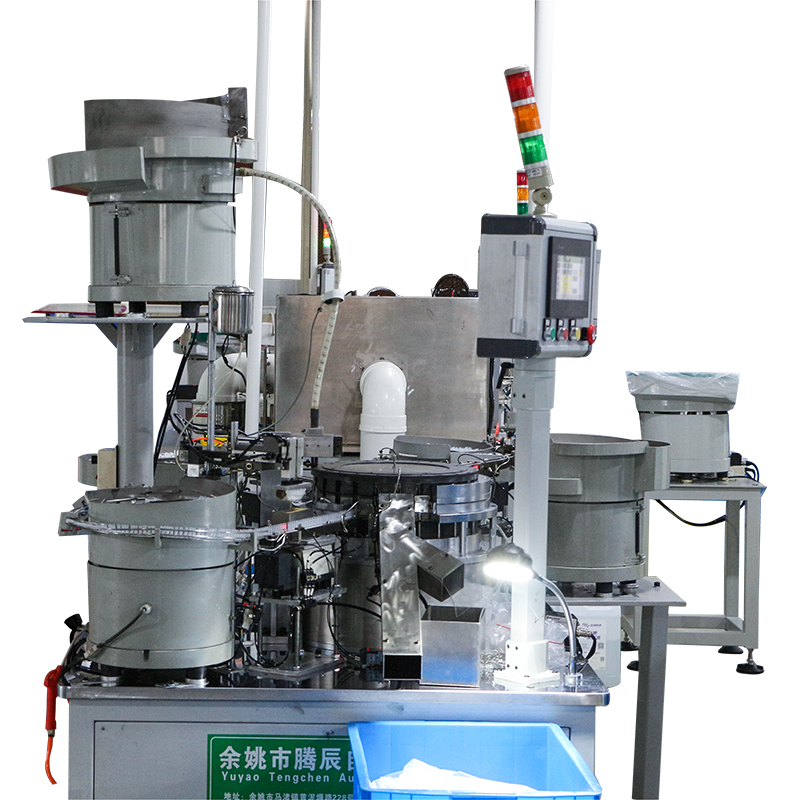
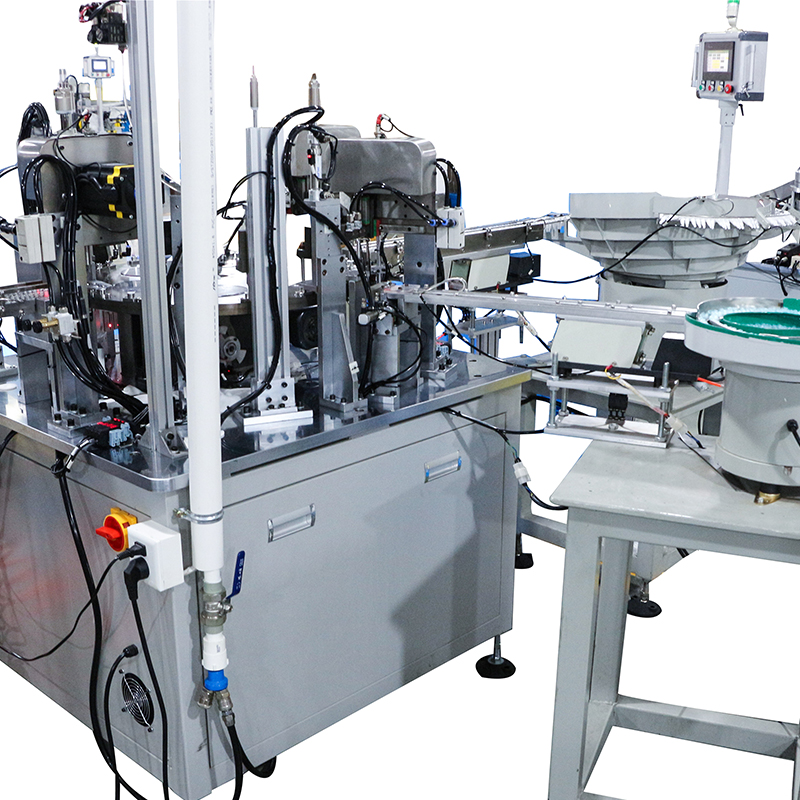
When an Automatic Assembly Machine switches between rigid materials like steel and flexible materials like rubber or silicone, performance drops significantly without proper reconfiguration. Rigid materials offer predictable geometry and high stiffness, making them straightforward for standard grippers and feeders. Flexible materials, by contrast, deform under gripping force, shift during transport, and resist consistent orientation — requiring fundamentally different tooling, sensing, and motion strategies. Understanding these differences is essential before committing to a machine configuration.
The Core Challenge: Geometry Stability vs Material Compliance
Steel components processed by an Automatic Assembly Machine maintain their shape under virtually any handling force. A steel bracket, bushing, or fastener will arrive at the assembly station with the same dimensions it had at the feeder — deviations are measured in microns and are largely predictable. This geometric stability is what makes high-speed, high-precision automation straightforward for rigid parts.
Rubber and silicone components behave entirely differently. Shore A hardness values for assembly-grade rubber typically range from 30A to 80A, meaning the material compresses, stretches, and rebounds under even modest contact forces. A silicone seal that is 25 mm in diameter at rest may measure anywhere from 23 mm to 27 mm depending on how it is gripped, oriented, or fed — creating position errors that a standard Automatic Assembly Machine's vision or insertion system is not calibrated to handle.
Gripper Performance: Rigid Precision vs Flexible Compliance
Gripping Steel Components
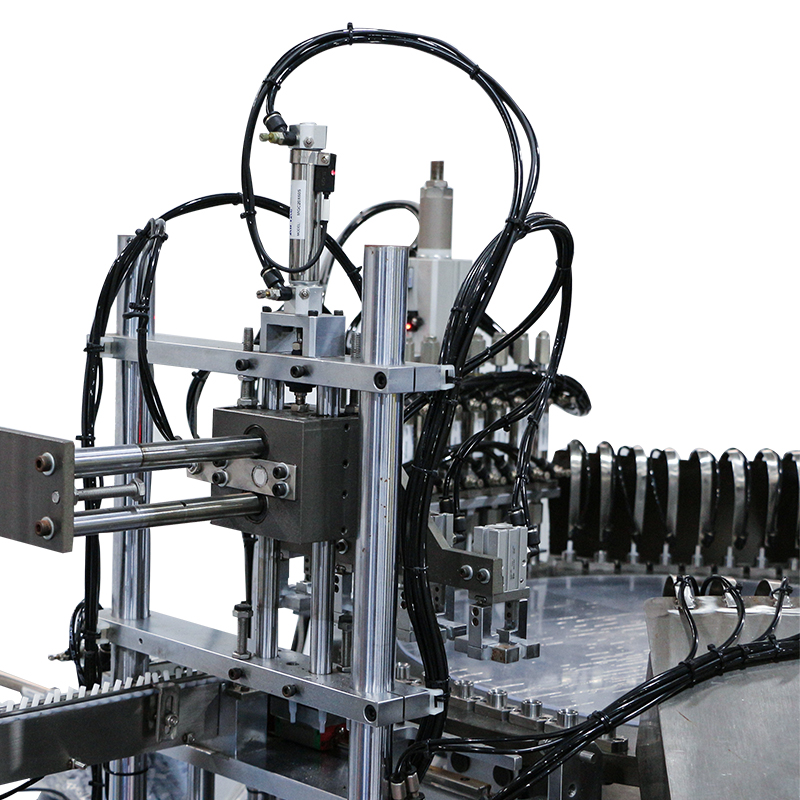
For steel parts, an Automatic Assembly Machine typically uses parallel-jaw pneumatic or servo-electric grippers with hardened steel or carbide-tipped jaws. Contact forces of 50–300 N are standard, and positional repeatability of ±0.05 mm is achievable without special compensation. High gripping force is an asset — it secures the part firmly with no risk of deformation, and high acceleration rates (up to 5–8 m/s²) can be maintained without part slippage.
Gripping Rubber and Silicone Components
Flexible parts require a fundamentally different approach. Excessive gripping force crushes or distorts the part, causing misalignment at the assembly point. Best practices for an Automatic Assembly Machine handling rubber or silicone include:
- Soft-touch grippers with compliant silicone fingertips or foam-padded jaws, limiting contact pressure to 5–20 N.
- Vacuum end-effectors using flat or bellows-style suction cups — particularly effective for flat silicone gaskets and sheet-cut rubber pads.
- Bernoulli (non-contact) grippers for ultra-thin or delicate silicone membranes that would deform under any direct contact.
- Reduced acceleration rates — typically 1–2 m/s² versus 5–8 m/s² for steel — to prevent flexible parts from shifting or oscillating during transport.
| Gripper Parameter | Steel Parts | Rubber / Silicone Parts |
|---|---|---|
| Gripper Type | Parallel-jaw / Angular | Soft-touch / Vacuum / Bernoulli |
| Contact Force | 50–300 N | 5–20 N |
| Jaw Material | Hardened Steel / Carbide | Silicone / Foam / Suction Cup |
| Max Acceleration | 5–8 m/s² | 1–2 m/s² |
| Positional Repeatability | ±0.05 mm | ±0.3–1.0 mm (with compensation) |
Feeding System Performance Across Material Types
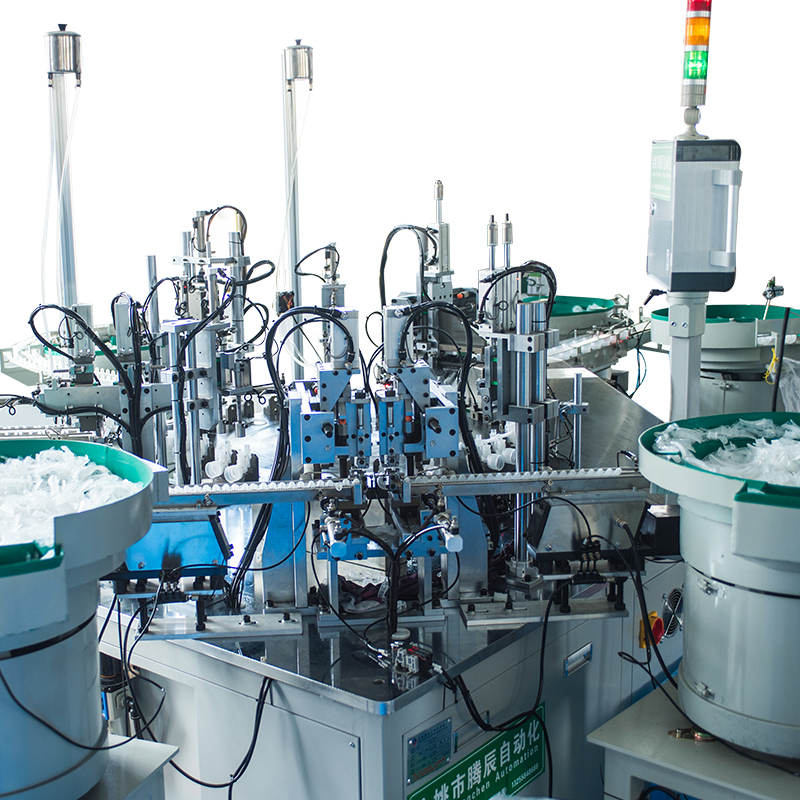
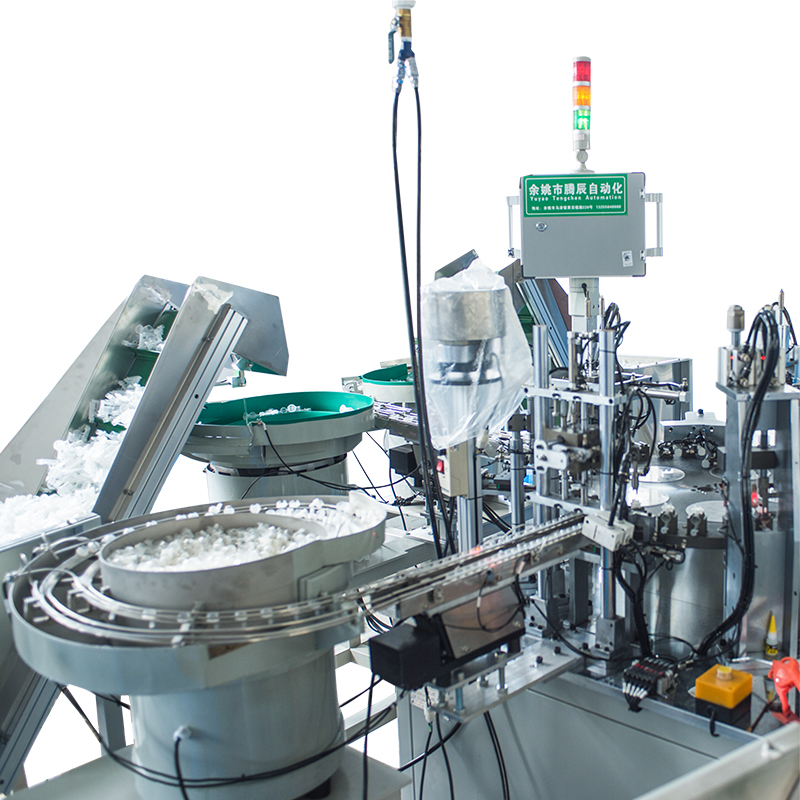
The feeding system is where the performance gap between rigid and flexible materials becomes most visible in an Automatic Assembly Machine.
Steel Part Feeding
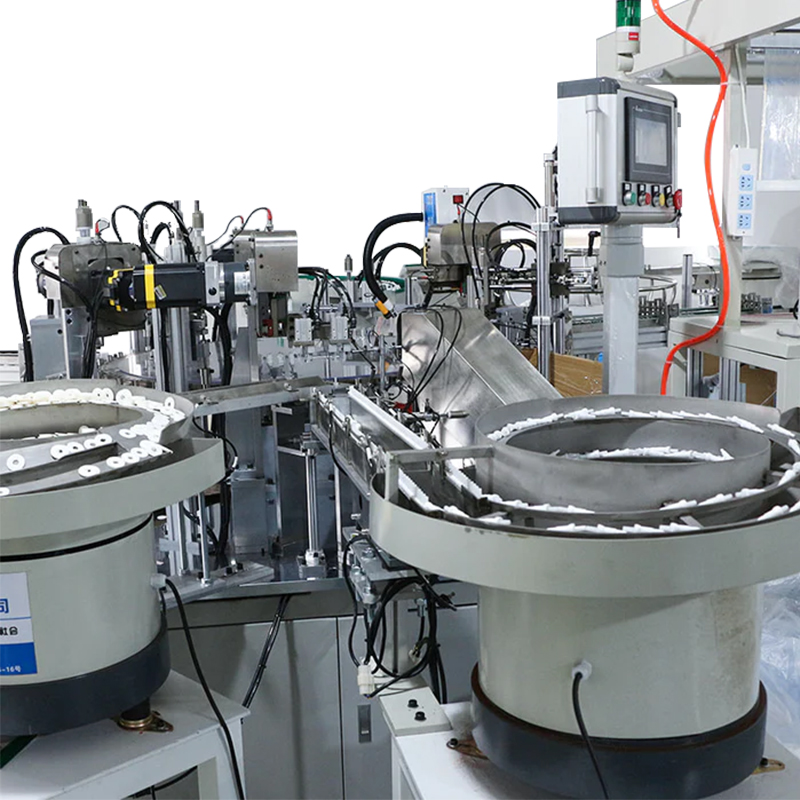
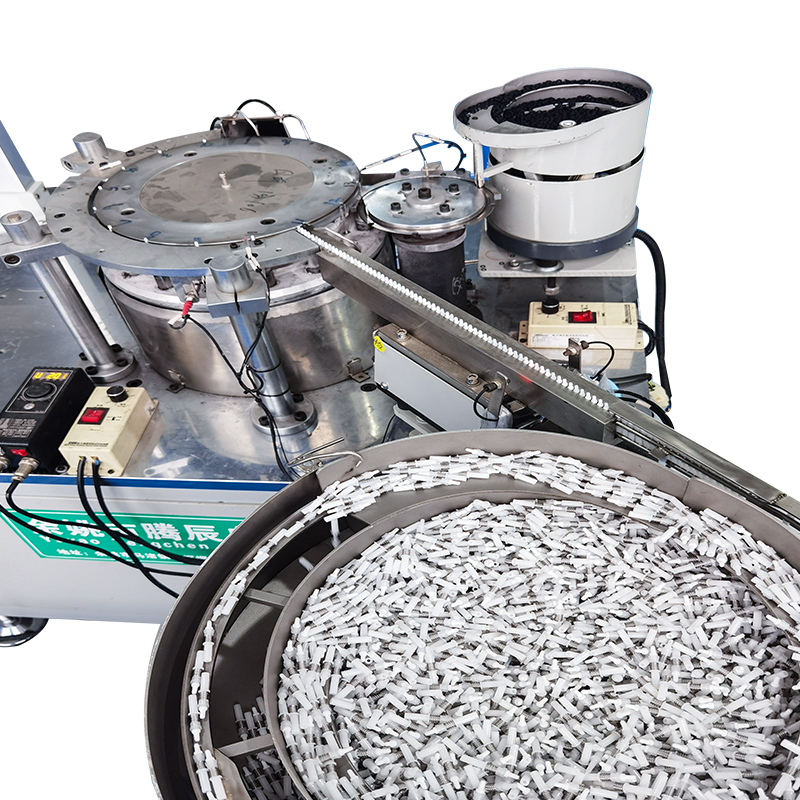
Steel components feed reliably through vibratory bowl feeders operating at 50–120 Hz with consistent orientation rates. Parts with defined edges, holes, or flats are easily oriented by passive tooling features machined into the bowl track. Feed rates of 80–200 parts per minute are typical for small steel fasteners and stampings, with minimal jams due to predictable geometry.
Rubber and Silicone Part Feeding
Flexible parts are notoriously difficult to feed in standard vibratory systems. Common problems include:
- Tangling and clumping — O-rings, gaskets, and rubber bands interlock in the bowl, causing feed jams that require manual intervention.
- Inconsistent orientation — without rigid geometry, passive track features cannot reliably flip or orient flexible parts.
- Static charge buildup — silicone is highly prone to static, causing parts to cling to bowl walls or to each other.
As a result, many Automatic Assembly Machine configurations for flexible materials use singulated tray systems, step feeders, or robot-assisted vision-guided bin picking instead of vibratory bowls. Feed rates for rubber/silicone parts are typically 15–40 parts per minute — significantly lower than steel equivalents. Anti-static ionizer bars are frequently added to silicone lines to reduce clinging and feeding errors.
Vision and Inspection System Calibration Differences
An Automatic Assembly Machine's vision system must be recalibrated when switching between steel and flexible materials, as optical and dimensional properties differ substantially.
- Steel reflectivity: Polished or machined steel reflects light harshly, often requiring diffused or ring lighting to suppress glare and highlight edges accurately.
- Rubber transparency issues: Some silicone grades are semi-transparent, making standard backlighting or contrast-based detection unreliable. Infrared or structured-light cameras may be required.
- Edge detection accuracy: Flexible parts present soft, undefined edges that challenge standard edge-detection algorithms. AI-based vision systems trained on deformed-part images outperform rule-based systems by up to 35% in detection accuracy for flexible components.
- Dimensional compensation: Because a silicone part's apparent size changes based on how it is resting or gripped, inspection thresholds must include a wider tolerance band (±5–10%) compared to ±0.5–1% for steel parts.
Insertion and Assembly Force Control
The insertion phase is where the Automatic Assembly Machine's force control capability is most critically tested across material types.
For steel-to-steel or steel-into-housing assembly, press-fit operations typically require 500–5,000 N of controlled insertion force, applied at a steady rate with a defined force-displacement curve. The machine confirms correct seating when force reaches a set threshold.
Rubber and silicone insertion is more nuanced. Installing a silicone O-ring into a groove or pressing a rubber grommet through a panel hole requires controlled low-force application — typically 10–80 N — combined with precise positional guidance. Too much force tears or rolls the seal out of position. The Automatic Assembly Machine must use force-torque sensors with real-time feedback loops that adjust insertion speed dynamically as the flexible part deforms and then snaps into place. This snap-fit detection — a sudden force drop of 15–30% within milliseconds — confirms correct seating for flexible seals.
Changeover Time and Production Planning Implications
Switching an Automatic Assembly Machine from steel to rubber/silicone production is not a minor adjustment. A realistic changeover involves the following steps:
- Replace gripper jaws or end-effector (parallel jaw → soft-touch or vacuum)
- Swap or reconfigure the feeding system (bowl feeder → tray or step feeder)
- Load material-specific motion profiles into the PLC (lower acceleration, adjusted speed curves)
- Recalibrate vision system lighting, camera exposure, and detection thresholds
- Reprogram force-torque sensor insertion profiles and acceptance thresholds
- Install anti-static ionizer bars if switching to silicone
- Run a validation batch (typically 50–100 parts) before full production release
Facilities with documented, rehearsed changeover procedures report completing this process in 45–90 minutes. Without standardized procedures, the same changeover can take half a shift or longer, significantly impacting OEE (Overall Equipment Effectiveness).
For operations that regularly run both steel and flexible material assemblies on the same Automatic Assembly Machine, the following design and procurement choices reduce friction significantly:
- Specify a servo-electric gripper with programmable force control rather than a fixed-force pneumatic gripper — this single investment eliminates the need for separate gripper modules in many cases.
- Invest in a modular feeding platform (e.g., FlexiBowl or similar vision-guided flexible feeder) capable of handling both rigid and flexible parts with software-based recipe changes rather than mechanical retooling.
- Ensure the Automatic Assembly Machine's PLC or robot controller supports named material profiles that can be recalled in under 30 seconds by the operator.
- Include a force-torque sensor as standard, not an optional add-on — it is indispensable for flexible material insertion and pays back in scrap reduction within the first production month.
- Do not assume that throughput rates for steel apply to rubber or silicone — build separate cycle time estimates for each material class when calculating line capacity and ROI.